About Us
Your Gateway to Authentic Morocco
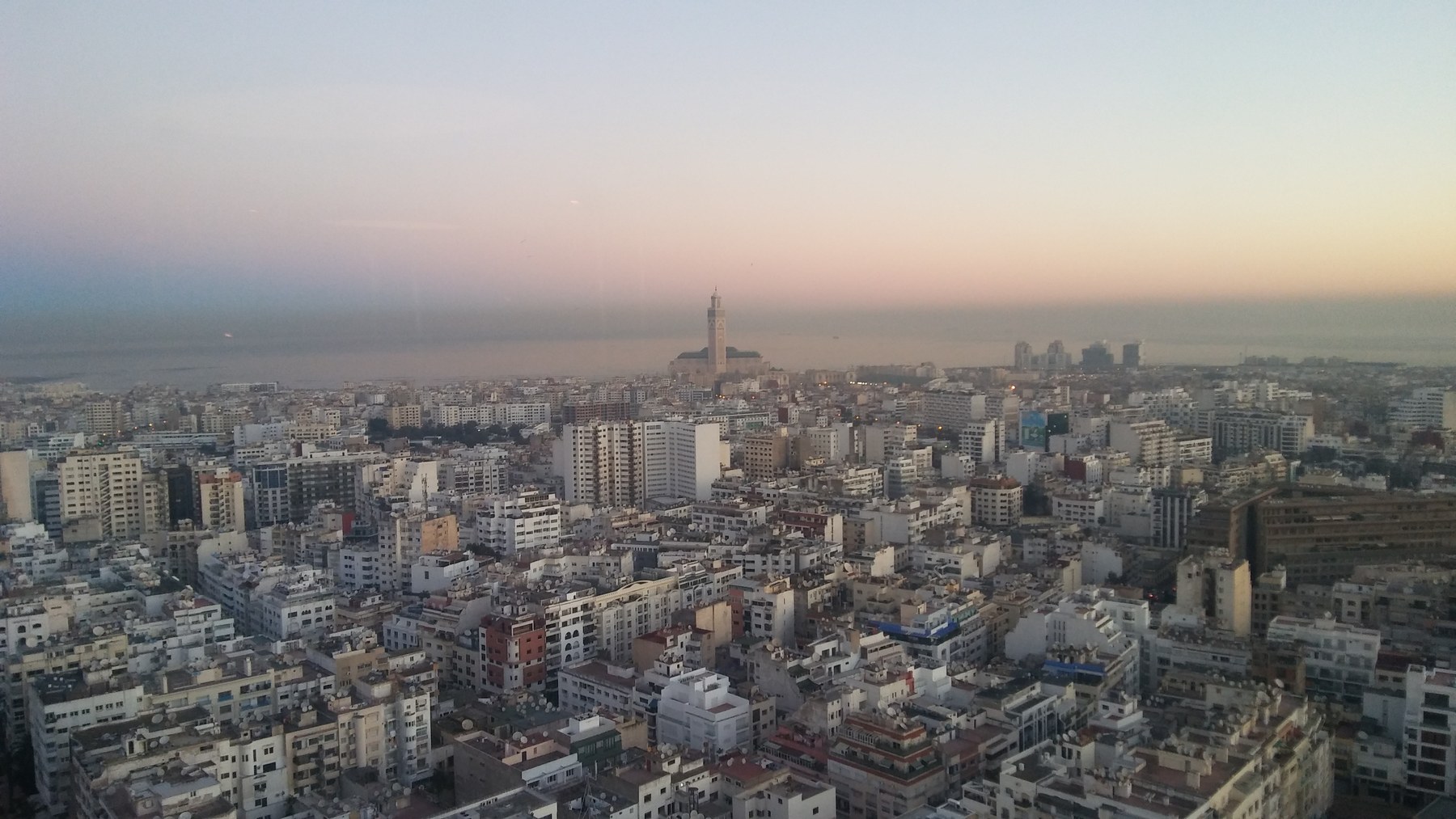
Morocco Coco Travel was founded with a simple mission: to share the beauty, culture, and warmth of Morocco with travelers from around the world. Based in Casablanca, we bring over 15 years of local expertise to every journey we create.
As a licensed tour operator and passionate Moroccan, I personally ensure that each guest receives an authentic, memorable experience that goes beyond typical tourism.
15+
Years Experience
500+
Happy Travelers
50+
Destinations
100%
Private Tours
Our Story
Meet the Experts for a Lifetime Experience
We are a small independent tour company specializing in private Morocco tours by the most enthusiastic, cheerful, knowledgeable and professional local people in tourism, with many years or decades of experience. Our love of traveling, contrasts, colors and rich cultural heritage that Morocco has to offer will inspire your travel experience.
In tourism, the people are the most important asset. In a tour, even more so. Since our inception, we've always given our top priority to finding the best human resources to work with. After all, a tour depends on so many factors but if the guide is right, the experience is guaranteed. After all, a guide can make the difference between a nice tour and a once in a lifetime experience one shall never forget. We really know Morocco and have had the pleasure of making many people's dream trips become reality over the years. It has been our privilege to be asked to manage holidays, weddings and productions for so many fantastic and discerning clients.
We remain small and dedicated to providing excellent honest advice to enable you to sit back, relax and enjoy the fun bits without having to manage the unpredictability of this fascinating country. If you want it done right, look no further! The Moroccan Family Tours evolved from our desire to personalize each trip with experiences that are unique, authentic, and a million miles from mass tourism. This is a feat that we believe computers won't be able to deliver for generations to come – an art that's best left to true travel specialists. We are looking forward to sharing with you some of the country's long history as a cultural melting pot that we have come to love and a people whose lifestyle and traditions we have grown to respect.
Our Commitment
Private Tours & Professional Service
We provide private tours for travelers through our selected professional local guides all around Morocco. We are an independent team of tourism professionals with a wealth of experience in creating tours of Morocco and providing personal, attentive service from start to finish.
Who better to introduce you to the wonders of Morocco than a native guide? We are committed to supporting our local communities, and creating once in a lifetime experiences for you. Whether you are here for 3 days or 4 weeks, north or south, desert or seaside, we will be with you the whole way, introducing you to Morocco we know and love.
Offering airport to airport service including a car and driver/guide, pre-designed tour plan, all accommodations, meals and the gift of local knowledge. Choose your level of accommodation, from comfortable and basic to luxury all the way. We are happy to serve you.
Morocco Coco Travel is owned and operated by a highly respected tour navigator. Our focus is on high-quality experience, personal service and a chance to learn and understand the culture of Morocco.
Our Values
What Drives Us
These core principles guide everything we do, from planning your itinerary to accompanying you on your journey.
Passion for Morocco
We share our deep love for Morocco's culture, landscapes, and people with every traveler we guide.
Personalized Attention
Every tour is tailored to your interests. We listen, adapt, and ensure your experience is uniquely yours.
Trust & Safety
Your safety and comfort are our priority. We're fully licensed, insured, and committed to excellence.
Local Expertise
Born and raised in Morocco, we share insider knowledge and authentic experiences you won't find in guidebooks.
Quality Service
From transportation to accommodations, we partner only with the best to deliver premium experiences.
Sustainable Tourism
We support local communities and practice responsible tourism to preserve Morocco for future generations.
Why Choose Us
The Morocco Coco Difference
- 1
Truly Private Tours
No shared groups, ever. Your tour is exclusively yours, allowing for complete flexibility and personalization.
- 2
Local Insider Access
Discover hidden gems, local favorites, and authentic experiences that most travelers never see.
- 3
Seamless Experience
From airport pickup to your final farewell, every detail is handled so you can focus on enjoying Morocco.
- 4
24/7 Support
We're always available before, during, and after your trip to ensure everything goes smoothly.
Destination Guide
Everything You Need to Know About Morocco
Winding streets in ancient cities, lively souks, precipitous mountain peaks and vast desert dunes. There are so many reasons to visit this vibrant and intoxicating country.
History & Culture
The traditional domain of indigenous peoples now collectively known as Amazigh (Free Noble People), Morocco has been subject to extensive migration and has long been the location of urban communities that were originally settled by peoples from outside the region. Controlled by Carthage from an early date, the region was later the westernmost province of the Roman Empire. Following the Arab conquest of the late 7th century CE, the broader area of North Africa came to be known as the Maghreb (Arabic: "the West"), and the majority of its people accepted Islam. Subsequent Moroccan kingdoms enjoyed political influence that extended beyond the coastal regions, and in the 11th century the first native Amazigh dynasty of North Africa, the Almoravids, gained control of an empire stretching from Andalusian (southern) Spain to parts of sub-Saharan Africa. Attempts by Europeans to establish permanent footholds in Morocco beginning in the late 15th century were largely repulsed, but the country later became the subject of Great Power politics in the 19th century. Morocco was made a French protectorate in 1912 but regained independence in 1956. Today it is the only monarchy in North Africa.
Geography
Morocco borders Algeria to the east and southeast, Mauritania to the south, the Atlantic Ocean to the west, and the Mediterranean Sea to the north. It is the only African country with coastal exposure to both the Atlantic Ocean and the Mediterranean Sea. Its area—excluding the territory of Western Sahara—is slightly larger than the U.S. state of California. Two small Spanish enclaves, Ceuta and Melilla, are situated on the country's northern coast. Morocco is the 57th largest country in the world.
Money in Morocco
The Moroccan currency is the dirham (DH). Every 1 dirham is divided into 100 cents. In Morocco, you can find banknotes of 20, 50, 100 and 200 dirhams, as well as 1, 2, 5 and 10 dirham coins. The Moroccan dirham is a restricted currency, meaning it can't be taken out of the country and is also not available abroad (with some exceptions). However, the Moroccan currency is quite stable and unaffected by large exchange rate fluctuations. Euros, dollars and British pounds are the most easily traded currencies in Morocco. On arrival, currency can be exchanged at the airport or you can withdraw cash from an ATM, which you can easily find in towns and cities.
Religion in Morocco
Muslims account for about 99% of Morocco's population. Christian and Jewish communities have existed here for centuries, but in recent years their numbers have dwindled. Islamic practices and philosophy dictate most aspects of daily life. The Arabic word "Islam" literally means "submission to God," and the core of the faith is the belief that there is only one God (Allah) who should be worshiped. Mohammed was the last and most definitive in a line of prophets who included Adam, Abraham, Noah, Moses, John the Baptist, David, and Jesus. Muslims believe that Christianity, Judaism, and Islam are all essentially the same, but that the messages from the earlier prophets have been distorted and that Mohammed was chosen by God to revive, refine, and purify His message. The main sources of Islam are the Koran (Qur'an)—the revelations Mohammed received during his lifetime—and Mohammed's own actions, the Hadith.
People of Morocco
Morocco's population is composed of two major ethnic groups: the indigenous Amazigh (Berbers) and the Arabs, who arrived in the 8th century bringing Islam with them. There has been so much intermarriage between Amazigh and Arabs since then that distinctions are largely meaningless. Sizable numbers of Amazigh live mainly in the country's mountainous regions—areas of refuge where they can preserve their language and culture. Some segments of the population are descendants of refugees from Spain who fled from the Reconquista, the Christian reconquest of the Iberian Peninsula in the 15th century. Trade and slavery brought a significant population of sub-Saharan Africans to Morocco, and their descendants now live chiefly in the southern oases and in the larger cities. Prior to the mass exodus of Jews between 1948 and 1967, Morocco had a population of over 250,000 Jews. Fewer than 5,000 now remain. Evidence of Jewish culture can still be seen in the older towns, especially in the mellah (Jewish quarter).
Food in Morocco
Moroccan cuisine has gained a following among connoisseurs worldwide, and the country's rich agricultural regions provide ample products for Moroccan kitchens. Meat staples include fish, lamb, and fowl—including pigeon, which is considered a delicacy when baked in pastry, the b'stillah, a national favorite. Tomatoes, peppers, onions, and eggplants are among the numerous vegetables typically used in dishes, and fruits of all varieties are enjoyed. Bread is, as in all countries of the Middle East and North Africa, a deep cultural symbol as well as a daily staple. The premier Moroccan food is couscous, a semolina-based pasta served with a meat stew. Kabobs of various types are common, as are salads and soups. Harira, a thick and hearty lamb soup, is served to break the fast at Ramadan and is a national specialty. The national drink is mint tea. Morocco is a wine-producing country, but production had begun to decline by the early 21st century under religious pressure that viewed alcohol consumption as inappropriate.
Language in Morocco
Although most Westerners presume Moroccans simply speak Arabic, the situation is more complicated. Morocco's indigenous Berbers had already been speaking their native tongue—nowadays collectively called Amazight—for thousands of years before Islamic-fueled Arab invaders of the 8th century imposed the language of their holy Koran on the region. Over time this became known as Classical Arabic. Its relation to spoken varieties today can be compared with Latin to the modern Romance languages. Classical Arabic is still taught in most Arabic schools and has changed little since the days of Mohammed. However, it is not used in the everyday lives of Arabic speakers. Modern Standard Arabic (MSA) evolved from Classical Arabic and is the official language of many nations, including Morocco. There are no native speakers of MSA, and it is rarely the mother tongue of most Arabic-speaking people. The vast majority of educated Arabs learn it in school. In Morocco, MSA is mainly used in formal situations (religious sermons, news broadcasts, government literature, and speeches) but rarely in conversation. Moroccans, Arab and Berber, generally converse in Moroccan Arabic, sometimes referred to as Darija. Moroccan Arabic contains fewer vowel sounds, sounds more guttural, appears to be spoken twice as quickly as MSA, and is at times very similar to Tamazight. Influences from Morocco's most recent occupiers, the French and Spanish, are audible in many words, resulting in a distinctly local dialect.
Tipping Culture
Morocco has a strong tipping culture—it is customary and even expected to tip small service providers such as restaurant and bar waiters, hotel staff, reception, cleaning personnel, bell boys, and taxi/van drivers. Tips are regarded as an essential means of supplementing income for those working in the tourism industry. Even though this might not be customary in your home country, it is generally expected and of great significance to the people who will be assisting you during your travels. Tipping is also expected and appreciated. One important note: It is not a good idea to offer coins to children who ask for them as once you do, the other children are likely to compete over the coin. Feel free to ask us if you have any doubt about tipping appropriateness.
Weather & Best Time to Visit
Morocco gets plenty of sun all year around. The northern and coastal areas have a Mediterranean climate with 30°C summers. Spring and autumn are warm and pleasant times to visit. Winters rarely get cold with temperatures around 20°C, but November to March has the most rain. Inland and in the south the climate gets more extreme. Close to the Sahara it's scorching in summer and winter nights get surprisingly cold. Morocco offers good weather 12 months of the year, but there are different places to visit at different times depending on your preferences.
Seasonal Breakdown
November to February: Winter months offer lovely warm days (high teens) and cold nights. Generally sunny and bright. March to June: Lovely months with warming weather (low to high twenties). Ideal all over the country. July and August: HOT months with temperatures inland reaching 46°C, but very dry heat. The coast is ideal at this time with temperatures in the high 20s and low 30s, perfect for beach weather.
Let's Create Your Journey
Ready to experience Morocco like a local? Get in touch and let's start planning your perfect adventure.
Our Team
Our Thoughtful Team of Knowledgeable Experts
Our thoughtful team of knowledgeable experts are here to take care of every need, from the second you contact us to when you return.
ABDERRAHMANE SERRAR
Founder & Lead Guide
Founder and CEO with decades of experience guiding travelers through Morocco with passion and expertise.
Arabic, Amazigh, French, English
Lahcen Laalal
Senior Tour Guide & Driver
Expert guide and driver specializing in immersive Moroccan experiences. Dedicated to authentic cultural connections.
Arabic, Amazigh, French, English
Abdelatif Ghadfan
Tour Operations Manager
Experienced tours manager ensuring every aspect of your journey is perfectly coordinated and seamless.
French, English, Arabic, Amazigh
Francisco Andreas
Booking & Digital Systems Manager
Technology expert ensuring our digital presence and booking systems run smoothly for your convenience.
English, French, Arabic, Amazigh
Ready to explore Morocco with our expert team?
Plan Your Trip With Our Team